
If you planned to use a federal tax credit to help pay for an insulation upgrade this year, you might have relied on that support. However, the credit expired at the end of 2025. Some York-area homeowners may delay their insulation projects because of this change. Losing the federal credit doesn’t mean all help is gone.
Pennsylvania’s updated statewide energy code took effect January 1, 2026, raising the mandatory insulation baseline for new construction subject to the code. Qualifying households can also still get free weatherization work through the state’s Weatherization Assistance Program. And ENERGY STAR estimates that air sealing and adding insulation can lower heating and cooling costs regardless of whether a tax credit is available.
Although the federal insulation tax credit expired, homeowners still have options. If you’re researching Pennsylvania insulation incentives in 2026, the first step is figuring out which one applies to your home.
Pennsylvania’s 2021 Energy Code Just Raised the Insulation Floor
Why the Code Update Matters Now
Pennsylvania’s latest Uniform Construction Code
update took effect January 1, 2026. The state adopted the 2021 International Codes with Pennsylvania amendments, creating a new statewide baseline for design and construction work.
This is a mandatory baseline, not an incentive. The requirements stay in place whether or not a tax credit is available.
York County falls in Climate Zone 4A under the county-level climate zone data used to establish these code minimums. The county’s climate zone helps determine which insulation requirements apply.
If you’re looking into the 2021 IECC Pennsylvania insulation code or York County insulation requirements 2026, the specific R-value requirements vary by climate zone. You can also read how the updated code compares with ENERGY STAR guidance.
The main takeaway for 2026 is that Pennsylvania raised its minimum energy-code baseline right as the federal tax credit ended. The current Uniform Construction Code now applies statewide to new design and construction work subject to the code.
For homeowners following the PA building energy code in 2026, those requirements apply regardless of whether incentives are available.
The PA Weatherization Assistance Program Is Still Active for Qualifying Households
Who Qualifies and What’s Included
Homeowners who meet the income guidelines may have another option.
Pennsylvania’s Weatherization Assistance Program provides eligible energy-saving improvements at no cost to qualifying households. Under the state’s current eligibility rules, household income must generally be at or below 200% of the Federal Poverty Income Level under guidelines effective January 13, 2026.
Some households qualify automatically if a member receives SSI, TANF, or LIHEAP, or has been found eligible for certain HUD or USDA programs. In York County, the York County Planning Commission administers the program.
Approved weatherization work can include attic and basement insulation, water heater and pipe insulation, and weatherstripping. Renters may also apply with their landlord’s consent.
One important limitation is that a home that has already received weatherization services is not eligible to receive them again.
If you’re interested in PA Weatherization Assistance Program insulation, apply directly through your local program. Because this is a government-run service, the program handles eligibility and applications directly.
Why Insulation Still Pays for Itself Without a Tax Credit
The Math That Doesn’t Depend on Any Incentive
A tax credit is temporary, but insulation’s energy-saving benefits can last for years.
ENERGY STAR estimates that homeowners can save about 15% on heating and cooling costs by air sealing and adding insulation in attics, floors over crawl spaces, and basements. These ENERGY STAR insulation savings don’t depend on a tax credit.
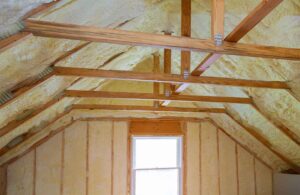
Air sealing and insulation can also reduce drafts, keep indoor temperatures more consistent, and improve humidity control.
If you don’t qualify for weatherization assistance, improving an under-insulated home can still reduce energy use and make the home more comfortable. That may mean adding insulation where it’s lacking or going beyond minimum code requirements when it makes sense for the home. Residential Insulation Services can address needs in different parts of the home, while Spray Foam Insulation can combine insulation and air sealing in hard-to-reach areas.
The federal credit may have helped with the initial cost, but it was never what made insulation effective.
FAQ
Is the federal tax credit for insulation still available in 2026?
No. The federal tax credit for insulation expired at the end of 2025. Pennsylvania homeowners may still be affected by the state’s updated energy code, and income-qualified households can apply for the Weatherization Assistance Program.
What qualifies a Pennsylvania household for the Weatherization Assistance Program?
Under the state’s current eligibility rules, household income generally must be at or below 200% of the Federal Poverty Level. Households may also qualify automatically through SSI, TANF, LIHEAP, or certain HUD or USDA programs.
What insulation code applies in York County in 2026?
York County is in Climate Zone 4A under Pennsylvania’s 2021 IECC-based Uniform Construction Code, which took effect January 1, 2026.
Does insulation still save money without any tax credit?
Yes. ENERGY STAR estimates that air sealing and adding insulation in key areas can save homeowners about 15% on heating and cooling costs. Those savings are not tied to a tax incentive.
What Are Your Options in 2026?
The federal credit is gone, but Pennsylvania homeowners still have options.
New construction needs to meet the state’s updated energy-code requirements. Households that qualify by income can receive free improvements through the Weatherization Assistance Program. Regardless of incentives, air sealing and insulation can help lower heating and cooling costs while making a home more comfortable.
If you’re not sure where your home stands, Liberty Insulation can evaluate your existing insulation and identify areas that may need improvement.
Schedule an estimate to see where your home could benefit from an upgrade.
References
ENERGY STAR. “Why Seal and Insulate?” U.S. Environmental Protection Agency, www.energystar.gov/saveathome/seal_insulate/why-seal-and-insulate. Accessed 20 Aug. 2026.
Pacific Northwest National Laboratory. “Guide to Determining Climate Zone by County: Data Files.” Building America Solution Center, U.S. Department of Energy, basc.pnnl.gov/guide-determining-climate-zone-county-data-files. Accessed 20 Aug. 2026.
Pennsylvania Department of Community and Economic Development. “Weatherization Assistance Program Income Eligibility.” Commonwealth of Pennsylvania, dced.pa.gov/housing-and-development/weatherization/income-eligibility/. Accessed 20 Aug. 2026.
Pennsylvania Department of Labor and Industry. “Uniform Construction Code (UCC).” Commonwealth of Pennsylvania, www.pa.gov/agencies/dli/programs-services/labor-management-relations/bureau-of-occupational-and-industrial-safety/uniform-construction-code-home. Accessed 20 Aug. 2026.
York County Planning Commission. “Weatherization.” York County, Pennsylvania, yorkcountypa.gov/231/Weatherization. Accessed 20 Aug. 2026.