
Pennsylvania homeowners often assume that because their house was built to code, it is insulated well. In reality, roughly 99% of PA homes were built before modern energy codes took effect, and even new builds are only required to meet the prescriptive minimums of the 2021 IECC, not the levels that actually optimize comfort and savings. In addition, insulation settles and compresses over time, becoming less effective, quietly driving up heating and cooling costs year after year.
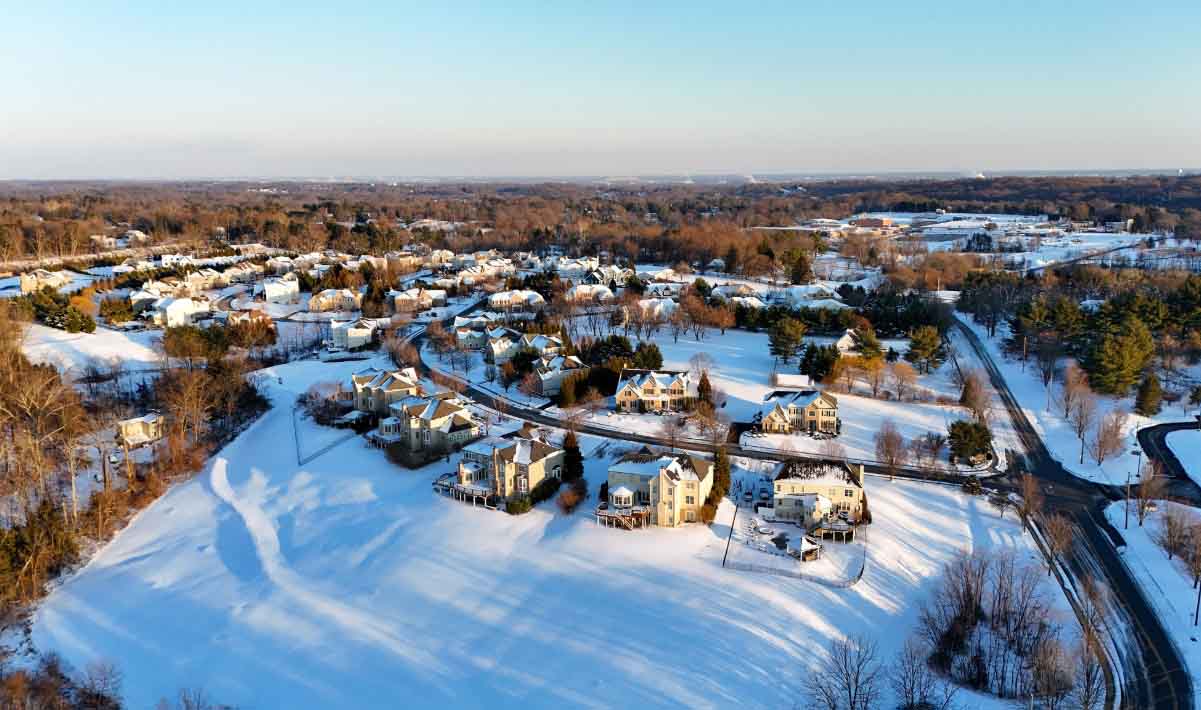
That matters more in Pennsylvania than in most states. With humid summers and freezing winters, indoor and outdoor temperatures can swing dramatically. According to the U.S. Department of Energy, heating and cooling account for the largest share of energy use in the average home, and poor insulation is one of the main reasons. In a state where January lows and July highs can differ by 80°F or more, an under-insulated home pays for that gap every month and contributes to the lack of home energy efficiency Pennsylvania homes look for.
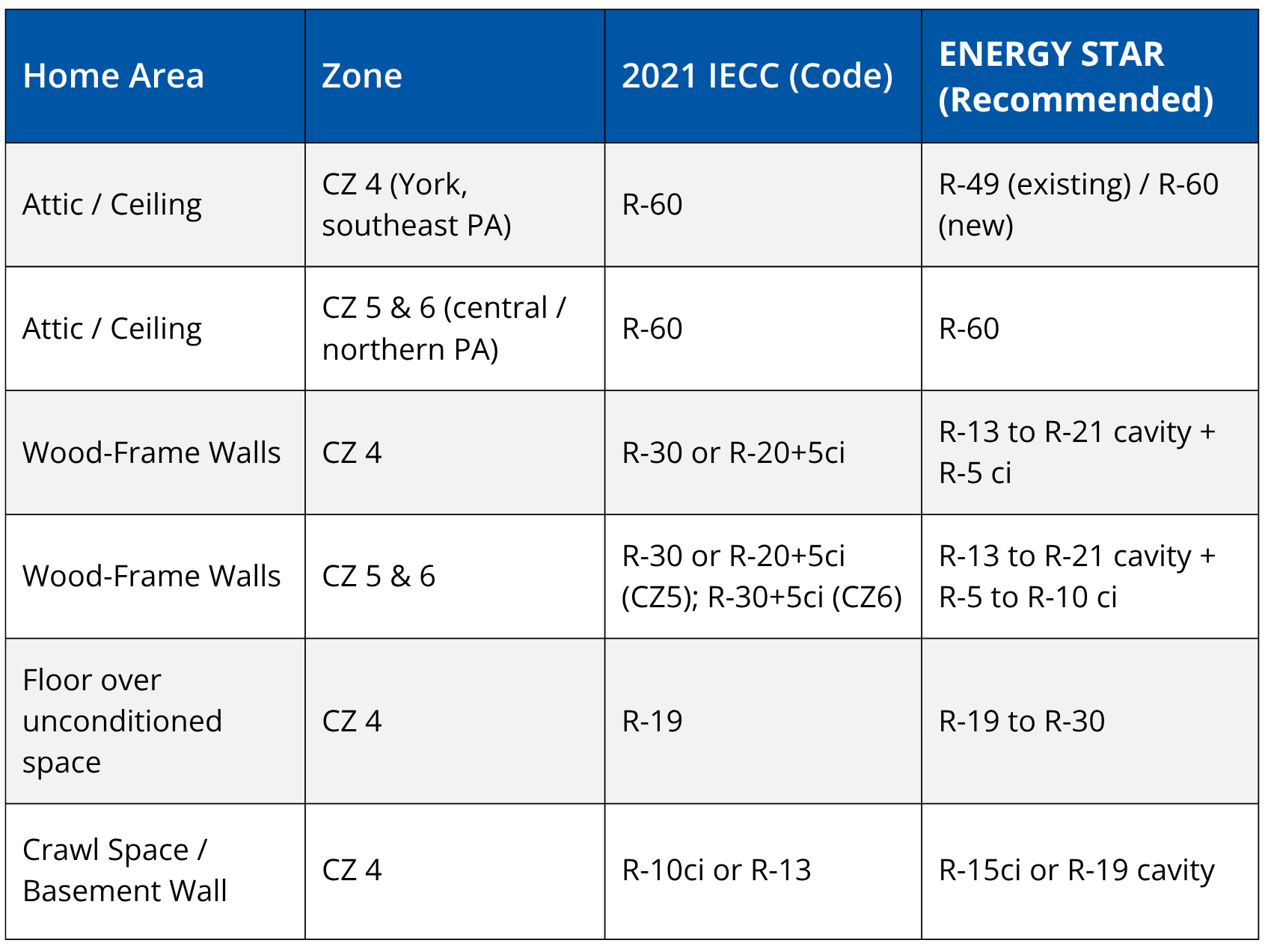
Pennsylvania spans IECC Climate Zones 4, 5, and 6, and under the 2021 IECC (effective January 1, 2026), most homes are required to have R-49 attic insulation, R-20 wall insulation, and R-19 floors. But simply meeting code isn’t enough. The ENERGY STAR program recommends pairing insulation upgrades with air sealing, which together can cut heating and cooling costs by roughly 15%.
Not sure if your home meets today’s standards—or how much it’s costing you? A professional energy evaluation can pinpoint exactly where you’re losing money.
What the 2021 IECC Actually Requires in Pennsylvania
Pennsylvania’s Updated Energy Code
Pennsylvania officially adopted the 2021 International Energy Conservation Code (IECC), effective January 1, 2026, replacing the older 2018 version. These standards are enforced under the Pennsylvania Uniform Construction Code (UCC). PA also allows alternative compliance through the Pennsylvania Alternative Residential Energy Provisions (PA-Alt), developed by the Pennsylvania Housing Research Center at Penn State.
The key thing most homeowners miss: this is the minimum acceptable performance, not the level that maximizes comfort or savings.
Pennsylvania’s Three Climate Zones
Pennsylvania isn’t one-size-fits-all when it comes to insulation requirements:
- Zone 4 (Mixed-Humid): Southeastern PA (York, Lancaster, Philadelphia)
- Zone 5 (Cold): Central PA (Harrisburg, Pittsburgh, State College)
- Zone 6 (Colder): Northern tier counties (Potter, McKean, Sullivan)
As you move north, insulation requirements increase because heat loss becomes more severe.
Where ENERGY STAR and the DOE Recommend Going Further
The Gap Between Code and Real Performance
The 2021 IECC in Pennsylvania prescriptive path lays out the required R-values for each climate zone. However, these are minimums, not optimums. They represent the lowest performance an installation can deliver and still pass inspection. The ENERGY STAR program publishes recommended insulation levels that often meet or exceed code—and more importantly, reflect real-world performance. For Pennsylvania’s zones, these recommendations align closely with or exceed the 2021 IECC prescriptive path.
Why That Gap Matters in Pennsylvania
This is where most homeowners leave money on the table. The U.S. Department of Energy states that heating and cooling account for the largest single share of a home’s energy use, and that properly insulating and air sealing reduces both energy costs and carbon footprint. According to ENERGY STAR, homeowners can save about 15% on heating and cooling costs by air sealing and adding insulation in key areas such as attics, crawl spaces, and rim joists.
That’s not a one-time savings. In Pennsylvania’s climate, where the number of heating degree days is high and summers are humid, that 15% savings figure compounds every month of the year, not just the coldest ones. Older Pennsylvania homes (pre-1980) were often built with wall insulation below R-11 and attic insulation below R-19, which is well below today’s standards and a prime candidate for retrofit.
Retrofitting vs. Meeting Code
However, one distinction to keep in mind is that code minimums apply to new construction and major renovations. Existing homes are not required to be retrofitted to current code, which is why most Pennsylvania homes fall short and underperform.
Upgrading to current code levels, or exceeding them, is almost always the highest-ROI efficiency improvement a homeowner can make, especially compared to updating windows or replacing HVAC.
Which Insulation Upgrades Deliver the Best Return in PA
Priority 1: Air Seal First, Then Insulate the Attic
The attic is the single highest-impact upgrade in almost every Pennsylvania home because warm air rises and escapes through every unsealed penetration in the ceiling plane. But insulation alone doesn’t fix the problem.
Air leaks around:
- Top plates
- Recessed lighting
- Plumbing penetrations
- Attic hatches
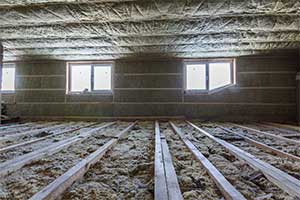
All of these allow warm air to escape, even with insulation in place. That’s why the U.S. Department of Energy emphasizes air sealing before adding insulation. Once sealed, adding blown-in cellulose insulation or loose-fill fiberglass is the most cost-effective way to reach R-49 to R-60.
Priority 2: Rim Joists and Crawl Spaces
Rim joists are one of the most overlooked problem areas in Pennsylvania homes. They sit at the intersection of framing and foundation, which makes them a prime source of cold air infiltration in winter. However, closed-cell spray foam at the rim joist insulates and air seals in one step, making it especially effective for this area.
Spray foam insulation air seals and insulates in one step, reduces drafts immediately, and improves comfort on first floors. Meanwhile, crawl spaces benefit from either encapsulation with rigid foam on walls or cavity insulation between floor joists, depending on whether the crawl space is vented or conditioned.
Priority 3: Wall Insulation (Best During Renovations)
Adding continuous exterior insulation during a re-siding project is a prime opportunity to upgrade wall performance without opening up interior finishes. For finished homes, dense-pack fiberglass or cellulose can be added to hollow or under-insulated wall cavities from the exterior with minimal disruption. This avoids tearing into interior walls which minimizes mess and inconvenience.
Where to Start: Get a Home Energy Assessment
If you have to guess where your home is losing energy, you’re doing it wrong. Pennsylvania offers multiple programs to help homeowners identify and fix inefficiencies, including:
- Utility rebate programs (Act 129)
- State-supported energy assessments
- Weatherization programs for qualifying households
A professional evaluation gives you a clear roadmap instead of trial-and-error upgrades.
Frequently Asked Questions
What R-value does Pennsylvania require for attic insulation in 2026?
A: Under the 2021 IECC adopted statewide January 1, 2026, the prescriptive requirement for ceiling/attic insulation is R-49 in all three of PA’s climate zones (Zones 4, 5, and 6) for new construction. Alternative compliance paths may permit R-60 in some cases.
How much can I save by upgrading insulation?
A: ENERGY STAR estimates homeowners can save an average of 15% on heating and cooling costs by air sealing and adding insulation in attics, floors over crawl spaces, and accessible basement rim joists.
What climate zone is my Pennsylvania home in?
A: Pennsylvania spans IECC Climate Zones 4, 5, and 6. Southeastern PA (including York, Lancaster, and Philadelphia) is in Zone 4; most of the central state is in Zone 5; the northern tier is in Zone 6. Zone assignment is made at the county level.
What type of insulation is best for Pennsylvania homes?
A: No single product is best for every application. Blown-in cellulose and loose-fill fiberglass are cost-effective for attics. Closed-cell spray foam is ideal for rim joists and crawl spaces because it insulates and air seals in one step. Batt insulation (fiberglass or mineral wool) works well in accessible wall cavities during new construction
Do I need to upgrade insulation if my home passed inspection?
A: No — existing homes are not required to retrofit to the current code. But code minimums are set for new construction, and many PA homes were built under older, less stringent codes. If your home predates 2010, it almost certainly falls short of today’s standards.
Are there programs that help pay for insulation upgrades?
A: Pennsylvania’s Weatherization Assistance Program, administered by the PA Department of Community and Economic Development, provides free weatherization services to income-qualifying households. The PA Housing Finance Agency also offers the HEELP loan program at 1% fixed interest for qualified energy improvements. Check with your local utility for Act 129 energy efficiency rebates.
Pennsylvania’s climate doesn’t reward minimal insulation. Code is the starting line, not the finish line, and homeowners who air seal thoroughly and insulate to or above current recommendations enjoy lower home heating and cooling costs, more even room temperatures, and quieter, more comfortable homes year-round.
For most Pennsylvania homes, the highest-impact upgrade is simple: Air-seal the attic and bring the insulation up to R-49 or R-60. Rim joists and crawl spaces are close behind.
If you want to know where your home stands and what upgrades will actually pay off, contact us to schedule a professional insulation evaluation.
References:
ENERGY STAR. “Methodology for Estimated Energy Savings from Home Sealing and Insulating.” U.S. Environmental Protection Agency, www.energystar.gov/saveathome/seal_insulate/methodology.
ENERGY STAR. “Recommended Home Insulation R–Values.” U.S. Environmental Protection Agency, www.energystar.gov/saveathome/seal_insulate/identify-problems-you-want-fix/diy-checks-inspections/insulation-r-values.
Pennsylvania Department of Community and Economic Development. “Weatherization Assistance Program (WAP).” Commonwealth of Pennsylvania, dced.pa.gov/programs/weatherization-assistance-program-wap/.
Pennsylvania Department of Environmental Protection. “Energy Efficiency Incentives.” Commonwealth of Pennsylvania, www.pa.gov/agencies/dep/residents/saving-energy/home-energy-efficiency-and-conservation/energy-efficiency-incentives.
Pennsylvania Housing Research Center. “Weatherization for Contractors.” Penn State College of Engineering, www.phrc.psu.edu/Industry-Education/Resources/Weatherization-for-Contractors.aspx.
U.S. Department of Energy. “Insulation.” Energy Saver, www.energy.gov/energysaver/insulation.[/vc_column_text][/vc_column][/vc_row]