
Pennsylvania’s cold winters and hot, humid summers make quality insulation essential for year-round comfort. For homebuilders across the Keystone State, insulation is more than just a selling point. It’s a requirement tied directly to energy performance, inspections, and long-term durability.
Understanding Pennsylvania home insulation requirements helps builders deliver homes that meet code, satisfy buyers, and perform efficiently for decades. This guide breaks down R-value requirements, explains why they matter, and outlines how builders can navigate today’s codes to support home energy efficiency in Pennsylvania while staying fully compliant.
Pennsylvania’s Climate and the Importance of Insulation
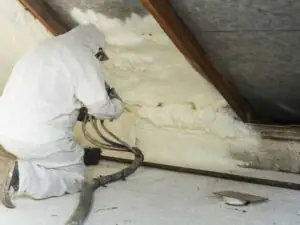
Pennsylvania spans multiple climate zones, which directly affects insulation strategies. The state is divided into three IECC climate zones: Zone 4 in the southeast, Zone 5 across much of the central region, and Zone 6 in the northern tier.
Homes built in colder northern areas require higher insulation levels than those in milder southeastern regions. Proper insulation slows heat transfer through the building thermal envelope, helping homes retain heat in winter and resist heat gain in summer.
The benefits are practical and immediate: fewer drafts, more even temperatures, and reduced energy use. According to PA data, roughly 99% of Pennsylvania homes were built before updated energy codes took effect. It’s been shown that homes built to PA’s current standards can reduce operating costs by as much as 30% compared to homes built only a decade or two ago. This highlights the value of strong home energy efficiency in Pennsylvania and of utilizing impactful insulation practices from the start.
Understanding PA Building Code: Insulation R-Value Requirements
Code Framework
Residential insulation standards in Pennsylvania are set by the PA Uniform Construction Code, which adopts the International Energy Conservation Code (IECC). The current statewide standard aligns with the 2018 IECC, implemented in 2022 with Pennsylvania-specific amendments.
These codes establish minimum insulation R-value requirements for walls, ceilings, floors, basements, and foundations by climate zone. R-value measures resistance to heat flow. The higher the number, the better the insulation performs.
Climate Zones & Key R-Value Requirements
Key statewide energy benchmarks include:
- Attic and ceiling insulation R-values: R-49 statewide for new homes.
- Above-grade exterior walls: Zones 4 and 5 need around R-20, while Zone 6 needs an equivalent of about R-25 total.
- Floors over unheated spaces: Insulate to R-30 in colder Zones 5 and 6, R-19 in Zone 4.
- Basement and crawlspace wall insulation: Zone 4 (York, Philadelphia) requires a minimum of R-10 of continuous insulation, while Zones 5 and 6 need R-15 for below-grade walls.
- Slab-on-grade floor insulation: In Zones 4 and 5, R-10 insulation is required for two feet around the perimeter at the slab edge, while Zone 6 requires four feet.
Together, these elements define the building envelope requirements, including insulation and fenestration criteria that work together as a system to control heat loss.
Compliance Paths
Pennsylvania allows multiple energy code compliance pathways. They include:
Prescriptive path
Follows prescriptive envelope requirements that meet or exceed each R-value directly.
Performance path or Energy Rating Index (ERI)
Builders can use software tools to show that a home’s overall efficiency is shown to be equal to or better than a code-compliant prescriptive home.
Many builders use REScheck, a free Department of Energy software tool that verifies compliance across the building thermal envelope and is widely accepted by code officials.
Staying Compliant: Energy Audits and Code Navigation
Energy audits and plan reviews are valuable tools for builders, not just homeowners. Reviewing insulation levels early can identify weak points before drywall goes up, preventing failed inspections or costly rework.
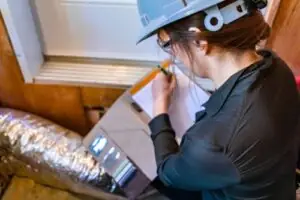
REScheck modeling or professional audits confirm that insulation meets residential energy code requirements. With REScheck, you can input insulation R-values for walls, roofs, floors, and more, along with window U-factors. The program will indicate if your design “passes” the energy code for your climate zone. These reports are commonly submitted during the permitting and inspection processes.
Some municipalities offer a residential energy code inspection checklist, like the sample energy code inspection checklist from the PA Construction Codes Academy. These checklists help verify insulation depth, contact with framing, labeling for blown products, and proper installation.
Building codes are not static, so it’s essential to stay up to date on potential code changes. Pennsylvania lawmakers are poised to adopt the 2021 IECC, which could introduce further changes in insulation or efficiency requirements. Builders should keep an eye on developments through official channels like the PA Department of Labor & Industry or the Pennsylvania Housing Research Center (PHRC).
Benefits of Upgrading Insulation Beyond the Minimum
Energy codes set the floor, not the ceiling. Many builders and homeowners choose to go a step further and exceed insulation minimums. Doing so delivers stronger performance, long-term value, and other benefits.
Energy Efficiency & Cost Savings
Higher insulation levels help reduce heat loss and gain, lowering utility bills and reducing HVAC strain. Over time, homeowners can save thousands in energy costs.
Enhanced Indoor Comfort
Comfort improves as well. Properly insulated and air sealed rooms above garages, along exterior walls, and on upper floors stay more consistent year-round with fewer drafts, cold spots, or hot ceilings. By creating a more stable indoor climate, upgraded insulation and air sealing contribute to a higher quality of life, which reflects well on a builder’s reputation.
Sound Barrier
Added insulation can act as a sound barrier, reducing noise from outside traffic or between floors. This gives homeowners a better sense of quiet and privacy within their home.
Improved Indoor Air Quality
A well-insulated and air-sealed building envelope helps improve indoor air quality. It helps keep out dust and outdoor pollutants, and when combined with proper ventilation, it helps limit moisture issues and mold growth.
Environmental Impact
Exceeding the energy code supports energy-efficient building practices in Pennsylvania and aligns with many weatherization program requirements for retrofit projects. It also creates a smaller carbon footprint by reducing greenhouse gas emissions and lowering energy use for heating and cooling.
Expert Tips for Navigating Insulation Projects in PA
Tip 1: Consult insulation professionals early
Experienced insulation contractors understand product selection, detailing, and installation methods that meet or exceed code. They are well versed in PA’s insulation products and code requirements and can recommend the right materials for each part of the job. They also ensure insulation is installed correctly for maximum performance.
Tip 2: Stay current on code resources
The PHRC and PA Energy Code offer training, guidance, and alternative compliance methods approved by the state that can be easier to use than the standard IECC in some cases. The PA Energy Code online portal is a handy reference for code details and FAQs.
Tip 3: Prioritize air sealing & insulation
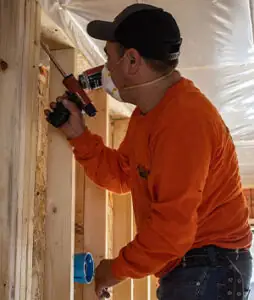
Even the highest R-value insulation won’t perform at its best if there are gaps and air leaks in the building envelope. A tightly sealed and well-insulated home will far outperform one that only focuses on R-value but ignores drafts.
Today’s energy code includes strict air leakage testing requirements for new homes, requiring three air changes per hour or less when tested at a pressure of 50 Pascals (ACH50). It’s important to ensure air sealing is done in tandem with insulation to secure an effective, continuous air barrier.
Tip 4: Consider the total building system
Insulation works as part of a system, alongside ventilation and moisture control. When you increase insulation levels, also plan for proper attic ventilation to help avoid moisture buildup.
Why Pennsylvania Builders Choose Liberty Insulation
Meeting insulation requirements is a critical step toward building comfortable, efficient, and code-compliant homes in Pennsylvania. When builders prioritize proper insulation tailored to PA’s climate zones, they deliver homes that perform better, last longer, and stand out in a competitive market. This allows homeowners to enjoy lower energy bills, cozier winters, cooler summers, and a healthier indoor environment.
At Liberty Insulation, we’ve proudly partnered with Pennsylvania builders since 1987. As the state’s largest independent insulation contractor, we understand local codes, inspection expectations, and real-world jobsite challenges.
Our team helps you meet today’s energy standards while building homes that exceed expectations for comfort and efficiency. If you’re ready to simplify compliance and raise the bar on performance, contact us today and build with confidence on every project.
References
City of York Pennsylvania. (n.d.). 2021 UCC code update and implementation. https://www.yorkcity.org/decd/bureau-of-permits-and-inspections/2021-ucc-code-update-and-implementation/
Efficient Windows Collaborative. (2018). Pennsylvania code compliance support: 2018 IECC. Efficient Windows Collaborative. https://efficientwindows.org/wp-content/uploads/codes2018/Pennsylvania2018.pdf
Insulation Institute. (2022). Pennsylvania residential energy code: 2018 IECC as amended. Insulation Institute.https://insulationinstitute.org/wp-content/uploads/2022/12/PA_Code_2022_v4.pdf
Pennsylvania Construction Codes Academy. (n.d.). Residential energy inspection checklist: Climate zone 5. Pennsylvania Construction Codes Academy. https://www.paconstructioncodesacademy.org/sites/default/files/2_res_energy_inspection_checklist_-_cz5.pdf
Pennsylvania Department of Environmental Protection. (n.d.). Home energy efficiency and conservation. Commonwealth of Pennsylvania. https://www.pa.gov/agencies/dep/residents/saving-energy/home-energy-efficiency-and-conservation
Pennsylvania Energy Code. (n.d.-a). Building envelope requirements. PA Energy Code. https://paenergycode.com/envelope/default.html
Pennsylvania Energy Code. (n.d.-b). Compliance pathways. PA Energy Code. https://paenergycode.com/pathways/default.html
U.S. Department of Energy. (n.d.-a). Building energy codes program. Office of Energy Efficiency & Renewable Energy. https://www.energycodes.gov/
U.S. Department of Energy. (n.d.-b). Pennsylvania energy code status. Building Energy Codes Program. https://www.energycodes.gov/status/states/pennsylvania
U.S. Department of Energy. (n.d.-c). States can use REScheck to show compliance. Building Energy Codes Program. https://www.energycodes.gov/states-can-use-rescheck-show-compliance