
Scratching or squeaking in the attic often makes homeowners think of mice. Across Pennsylvania, the real cause is often a colony of bats instead. Many homeowners assume they can quickly remove the bats and replace any damaged insulation, but that is usually not the case. Bats in attic spaces are protected under Pennsylvania state law; excluding them at the wrong time is illegal. Doing it wrong can also trap flightless pups inside your walls.
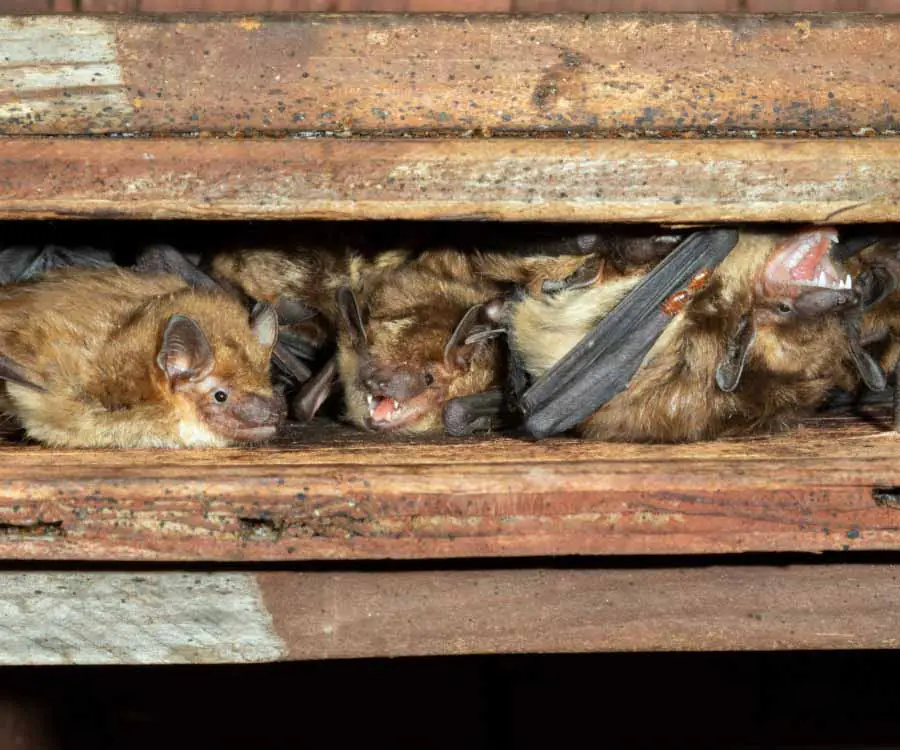
Bats must be excluded from your attic before any insulation work can begin. The safest windows for bat removal are in the spring and the fall. Read on to learn more about the legal timing for bat exclusion in Pennsylvania and how that timing affects insulation removal and installation.
If bats have invaded your attic and damaged your insulation, the safest first step is to schedule a professional to inspect your bat-damaged insulation and create a plan.
Bats Are Protected in Pennsylvania
All bats are protected under Pennsylvania game law when they are flying and hibernating, and it is illegal to poison or otherwise harm them. The little brown bat is especially important in our state. Once the most common bat species in Pennsylvania, it is now listed as endangered after a fungal disease called white-nose syndrome wiped out 98-99% of its population.
There are no toxic chemicals or poisons approved for bat control in Pennsylvania. Bats are also considered a rabies vector species. Although only a small number of them actually carry the virus, you should never handle one with your bare hands. Legal protection paired with the risk of disease is why licensed wildlife professionals are the best choice to handle bat work rather than a general pest control company.
The Timing Rules — When Exclusion Is and Isn’t Allowed
Understanding the bat exclusion Pennsylvania rules starts with the calendar. Bats return to their roosts in spring and give birth in late May or early June. Pups cannot fly until around mid-July, so exclusion work is not allowed during that stretch. Sealing your attic during bat maternity season in Pennsylvania would trap the pups inside, creating a health hazard and a legal violation.
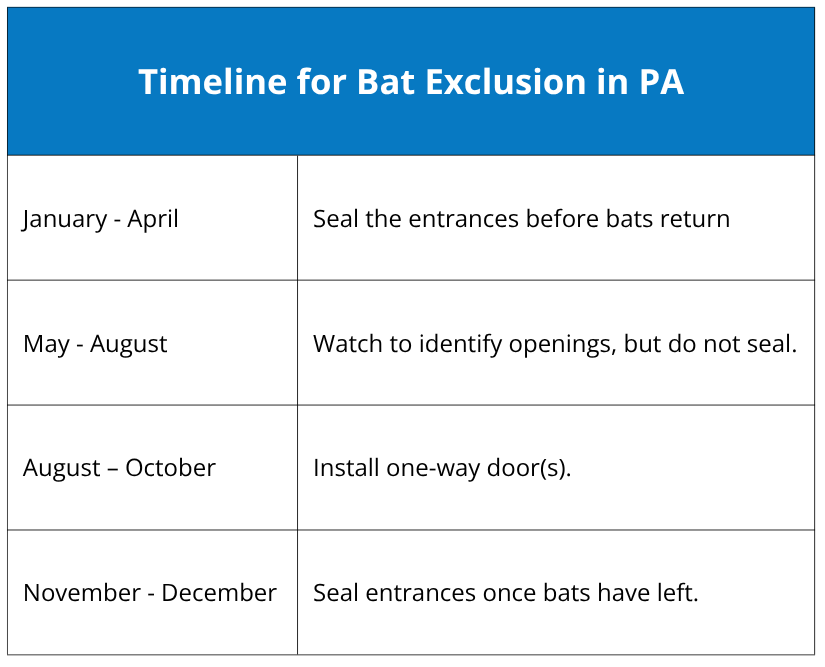
The Penn State Extension website breaks the year into simple windows for bat proofing timing Pennsylvania homeowners can follow. Seal entrances January through April, before bats return. Watch the attic May through August to find openings, without sealing anything. A one-way door bat exclusion can go in from August through October, once pups can fly. Seal entrances for good in November or December, after every bat has left.
A one-way door lets bats crawl out at night without letting them back in. Homeowners often ask when to remove bats from the attic of their PA home, and the honest answer is that the calendar decides, not the contractor.
Refer to the timeline below for guidance in safely removing bats from your home.
What Bats Mean for Your Insulation
Once any bats have been safely and legally excluded from your attic, the next step is cleanup, especially of dirtied insulation. Bat guano and urine soak into insulation fibers over time. That contamination is a common reason to replace your attic insulation rather than add more on top. Homeowners typically replace insulation after bat attic exclusion wraps up, since fouled material rarely performs the way it should.
Bat droppings can carry a fungus called Histoplasma, and disturbing dried guano can release spores that cause a respiratory infection when inhaled. This makes bat droppings histoplasmosis attic exposure a real concern. That is why it is recommended that large accumulations of droppings be handled by professionals trained in hazardous waste removal. For smaller cleanups, it is important to avoid dry sweeping or shoveling and to wet the material first to keep the spores from going airborne.
A thorough bat guano attic insulation cleanup clears contaminated material and leaves your space ready for fresh insulation. Re-insulating afterward restores the R-value your home lost and brings comfort back. This is also a good time to check for gaps around your pipes and wiring, since spray foam insulation can seal small openings that pests might use again. Homeowners searching for York, PA attic insulation replacement after a bat problem can count on local residential insulation services for a full assessment and a clean start.
Frequently Asked Questions
Is it illegal to remove bats from your attic in PA?
Yes, in the wrong season. Bats are a protected species; excluding them outside the legal windows violates state wildlife law.
When can you remove bats from an attic in Pennsylvania?
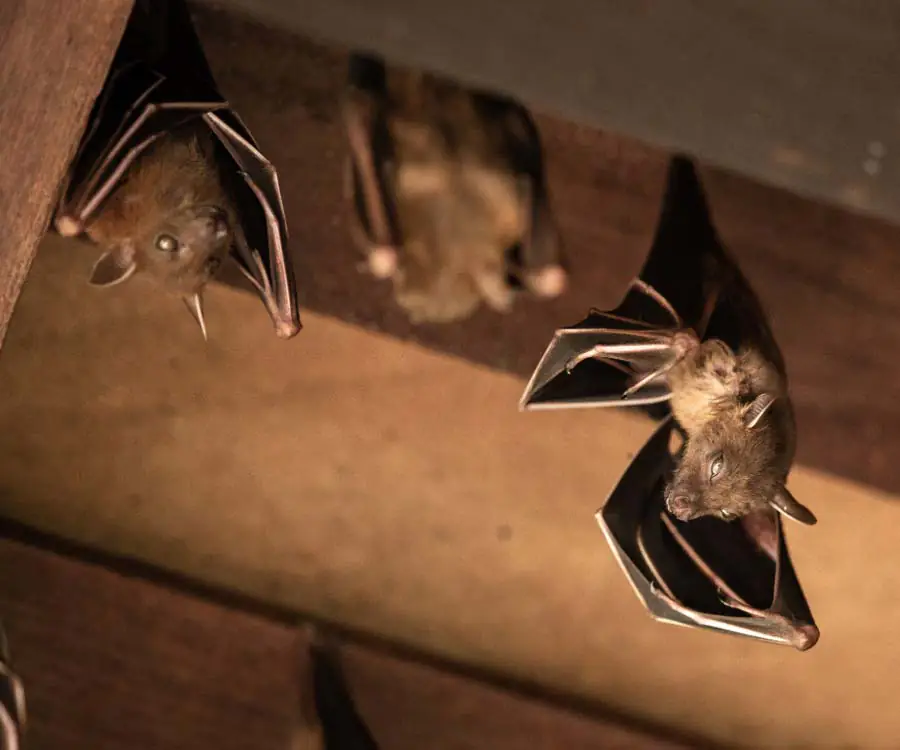
It is illegal to remove bats from late May through mid-July, when pups are flightless. Spring and fall are the preferred windows, and one-way doors typically go in between August and October.
Do you have to replace insulation after bats?
Usually, yes. Insulation dirtied by guano and urine rarely performs well afterward, so most homeowners remove and replace it once the bats are gone. Utilize pro cleanup for large quantities.
Is bat guano in insulation dangerous?
It can be. Guano may carry Histoplasma fungus, and inhaling disturbed spores can cause a lung infection. Wetting the material before removal helps limit that risk.
Can I do bat cleanup myself?
Small amounts may be manageable with gloves and a mask, but the CDC advises professional removal for large accumulations, along with proper PPE and dust suppression.
Get the Timing Right the First Time
Bat problems in Pennsylvania attics follow a specific order. The timing rules come first, then legal exclusion, then insulation cleanup and replacement. Skipping ahead can mean trapped pups, wasted money, or insulation that still is not doing its job.
Liberty Insulation understands both sides of this process, from the wildlife timing that governs when work can start to the insulation expertise that finishes the job right. If bats have left your attic insulation in rough shape, reach out to our expert insulation team or call 717.767.9082 today to schedule your free assessment. We’re here to get your York area home back to full efficiency.
References
Brittingham, Margaret, and Lisa M. Williams. “Bats.” Penn State Extension, The Pennsylvania State University, https://extension.psu.edu/bats.
Centers for Disease Control and Prevention. “How People Get Histoplasmosis.” CDC, U.S. Department of Health and Human Services, www.cdc.gov/histoplasmosis/causes/index.html.
Centers for Disease Control and Prevention. “Reducing Risk for Histoplasmosis.” National Institute for Occupational Safety and Health, U.S. Department of Health and Human Services, www.cdc.gov/niosh/histoplasmosis/prevention/index.html.
Centers for Disease Control and Prevention. “Elimination and Engineering Controls.” National Institute for Occupational Safety and Health, U.S. Department of Health and Human Services, www.cdc.gov/niosh/histoplasmosis/prevention/elimination-and-engineering-controls.html.
Pennsylvania Game Commission. “Nuisance Wildlife.” Commonwealth of Pennsylvania, www.pa.gov/agencies/pgc/wildlife/nuisance-wildlife.